
Solar Extinguishers: PVSTOP Solar Panel Block Out, UK Manufactured You can't switch the sun off.
Solar extinguishers, in the sense most people mean the term, don't exist. A solar panel generates electricity the moment light hits it: no isolator, no rapid shutdown, no breaker downstream changes that, and no combustion extinguisher can safely deal with a live array. PVSTOP is what fire and rescue services actually reach for instead, a water-based polymer that blocks the light at source and stops generation on contact. It belongs alongside your extinguisher range as the tool for the one risk extinguishers alone can't touch. Supplied and delivered UK-wide by TristarFS.
A panel is a generator, not a circuit.Cut the supply, throw every isolator, trip the lot, and while daylight falls on that array it's still making DC voltage, still live, still dangerous to anyone who has to get on that roof.
What people mean by “solar extinguishers,” and what actually works.
A standard fire extinguisher puts out combustion. A solar panel isn't burning. It's generating live DC voltage for as long as light hits it, whether or not anything is on fire. Spraying an extinguishing agent at a live array doesn't stop that generation, and depending on the agent, it can turn a manageable situation into an electrical hazard for whoever's holding the nozzle.
That's the DC danger zone: cut the mains, throw every isolator, trip every breaker, and the panel is still live the moment the sun's up. PVSTOP, also searched as a “solar panel extinguisher” or a “pv stop extinguisher”: solves that problem directly by removing the electrical hazard rather than trying to fight a fire that isn't there. It lets firefighters, engineers, or your own team get safely close to an array to assess storm damage, isolate a fault, or decide. If there's an actual fire involved, a battery storage fire alongside the array, for instance: you need PVSTOP to de-energise the panels and a suitable extinguisher for the fire itself. See the P50-AVD for lithium-ion battery fire cover.
Two sizes, one job: stopping generation on contact.
Both PVSTOP units contain the same polymer, throw it the same 10m+ distance, and do the same thing. The only question is how much roof you need to cover before the unit runs dry.
Domestic and light commercial
Six litres and forty-five seconds of continuous discharge, in the familiar 178mm composite body. The right unit for housing stock, small commercial roofs, agricultural buildings, and anywhere a single modest array is the risk.
Commercial roofs and solar farms
Nine litres and seventy-five seconds: two thirds again more coverage per unit, in the larger 210mm body. Where the array is a warehouse roof, a school, a car park canopy or a ground-mounted farm, this is the one that reaches enough of it.
PVSTOP is not a fire extinguisher and does not put fires out. It carries no fire rating, because extinguishing isn't what it does. Its job is to remove the electrical hazard so people can safely do theirs: fight a fire, assess storm damage, work on a roof, or make a decision without a live DC array in the way.
Which means it sits alongside your extinguishers, not instead of them. Premises with PV and a battery storage system need both: PVSTOP to de-energise the array, and a suitable extinguisher for the fire itself.
10 metres of standoff
Applied from the ground or a safe position rather than at arm's length over a live array. Ten metres of delivery range is what makes it usable before anyone commits to the roof.
Composite body, 12 bar
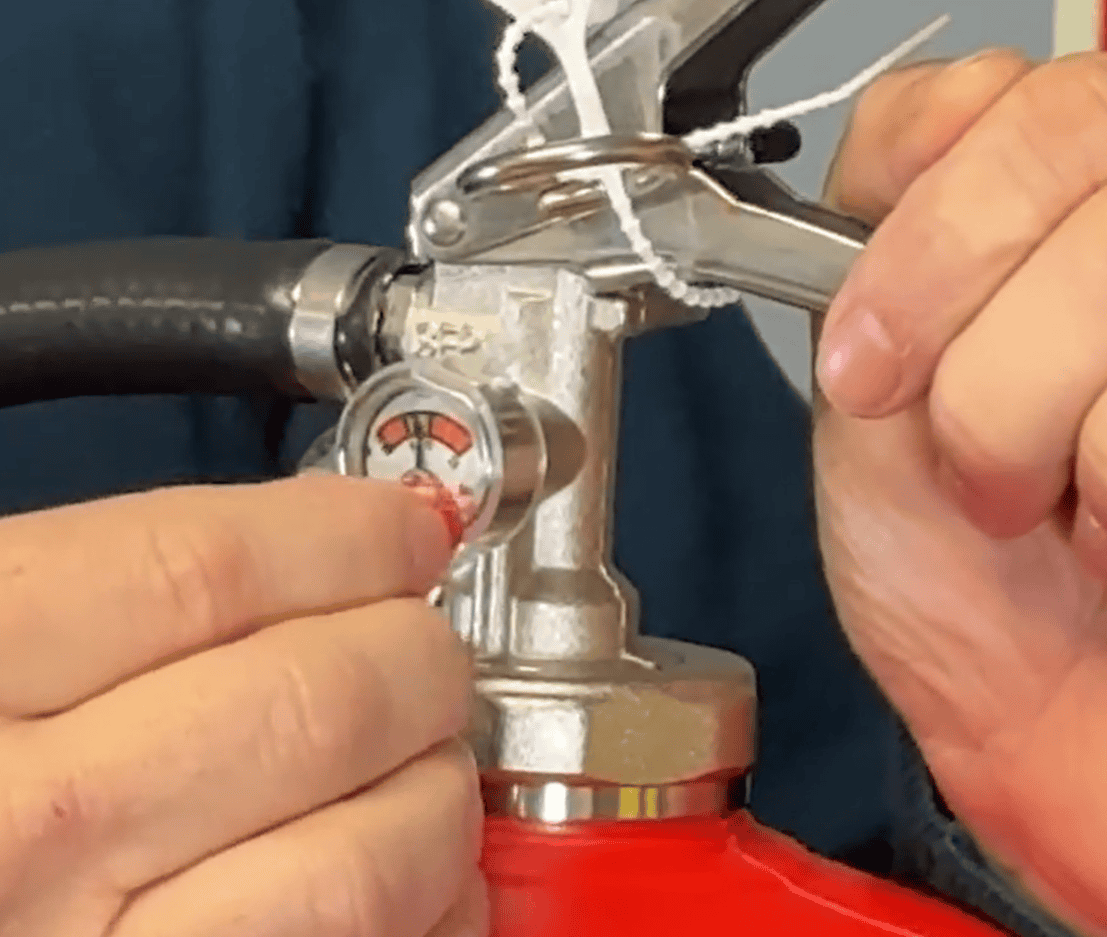
The same corrosion-proof composite cylinder as the P50 extinguisher range, so it can be sited outdoors at the array, in a plant room or on a vehicle without rusting away between inspections.
Water-based polymer
Non-flammable, fire-retardant and non-toxic. It goes on wet or dry surfaces, solidifies into an opaque film, then peels off clean. Disposable with general waste: no specialist collection, no residue on the panel.
Wet or dry surfaces
5-year service life · 3-year warranty
Built for the worst two minutes.

Spray it. Peel it. Panels unharmed.

Treat the array as live
Isolators and rapid shutdown do not make a panel safe. While light falls on it, it generates. Nobody should be committing to that roof yet.

Apply from standoff
Ten metres of delivery range means the coating goes on from the ground or a safe position: wet surface or dry, it makes no difference to the polymer.
Generation stops on contact
Light is blocked at source, so output drops immediately. Because cells run in series, even partial coverage is enough to break the circuit.

It sets, and it stays
The coating solidifies into an opaque, weatherproof film that can stay put for up to 12 months: through assessment, insurers and repair scheduling.

Peel it off
When the work is finished the film peels away cleanly, leaving the panels undamaged and back in service. Non-toxic, and disposable with general waste.

Proven on real incidents, not just in a lab.
PVSTOP has been operationally validated by London Fire Brigade, FDNY and the Singapore Civil Defence Force.
ISO 14034:2016 verified.
PVSTOP is the only solar safety solution to achieve ISO 14034 Environmental Technology Verification, with independent testing confirming its effectiveness.
Book your free evaluation →Both units, side by side.
| Specification | PVSTOP 6LBFPVS6 | PVSTOP 9LBFPVS9 |
|---|---|---|
| Capacity | 6 litres | 9 litres |
| Discharge duration | 45 secs | 75 secs |
| Delivery range | 10 m+ | 10 m+ |
| Full weight | 8.5 kg | 11.7 kg |
| Height | 570 mm | 640 mm |
| Diameter | 178 mm | 210 mm |
| Pressure @ 20°C | 12 bar | 12 bar |
| Agent | Water-based polymer | Water-based polymer |
| Fire rating | N/A: not an extinguisher | N/A: not an extinguisher |
| Temp range | N/A | N/A |
| Service life | 5 years | 5 years |
| Warranty | 3 years | 3 years |
PVSTOP is the only solar safety product to achieve ISO 14034:2016 Environmental Technology Verification, with independent testing confirming its effectiveness. It has been operationally validated by major fire services worldwide, including the London Fire Brigade, Fire Department New York, and the Singapore Civil Defence Force.
Where Can You Use PVSTOP?
A photovoltaic array generates whenever there is light on it, which is the problem PVSTOP is built for: it blocks the light at source so the panels stop generating on contact. These are the premises where a live DC array most often gets in someone’s way.
Commercial Rooftop Arrays

The common case: a roof covered in panels, and a reason to get people onto it, such as a fire in the building beneath, storm damage, an insurance inspection, or maintenance. Blocking the array first takes the electrical hazard out of the decision.
Warehousing & Logistics

Large single-span roofs carry the biggest arrays on the least accessible structures. The 9 litre unit exists for roofs at this scale.
Solar Farms & Ground Mounts

Ground arrays are easier to reach and no less live. Applied from ground level at 10m or more, without walking out among the strings.
Agricultural & Rural Buildings

Barns and outbuildings with roof arrays, often a long way from the nearest fire and rescue response and full of exactly the kind of stored material nobody wants a live array above.
Schools, Offices & Public Buildings

Occupied buildings where an evacuation puts responders on a roof they did not design. It peels away afterwards without damaging the panels, and can stay in place for up to 12 months if the array needs to remain offline.
UK Manufactured.
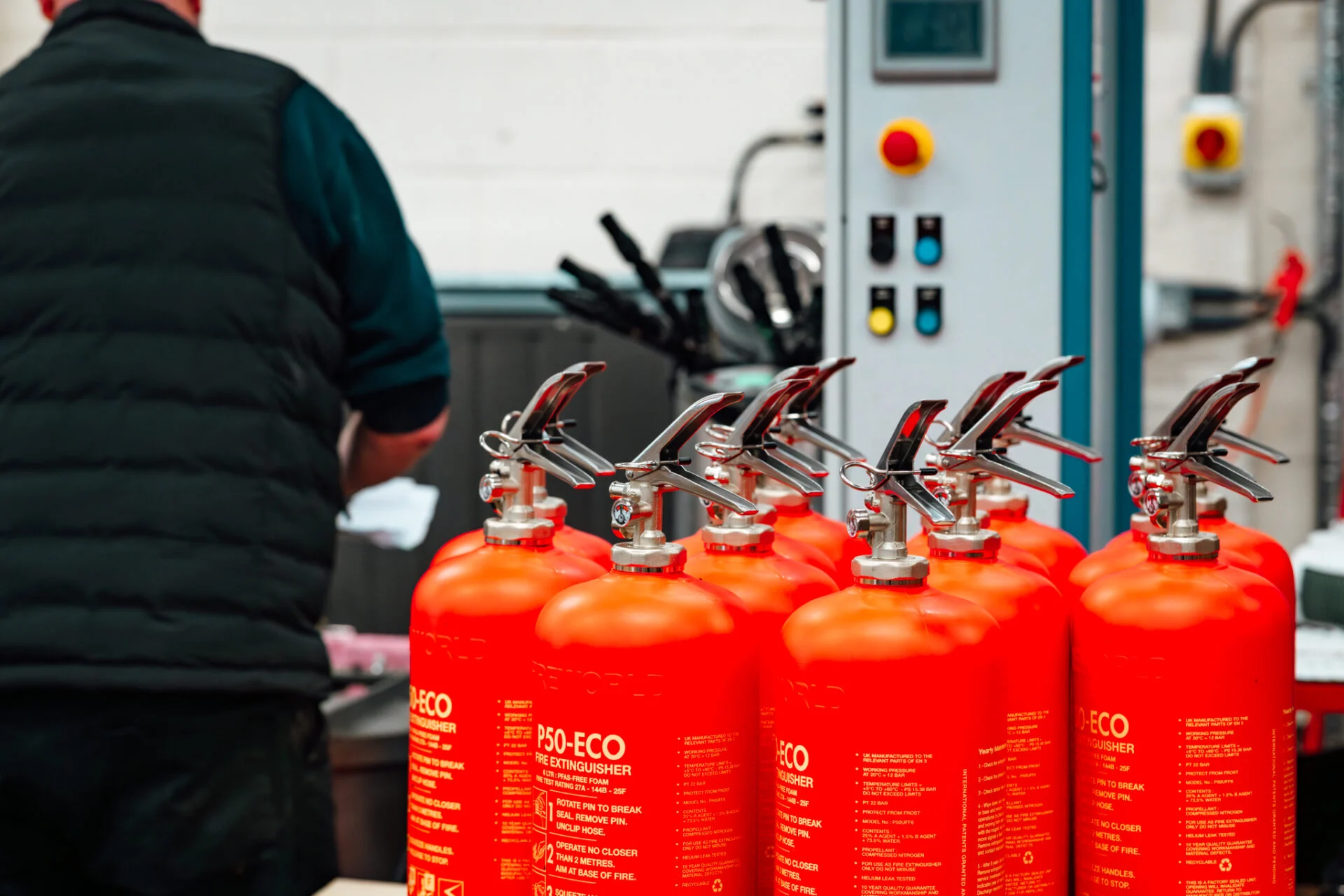
PVSTOP is manufactured in Britain by Britannia Fire in Norfolk, England, in the same composite cylinders as their P50 extinguisher range, and validated in the field by fire services on three continents.
Engineered in Norwich
A British manufacturer, not an importer, with PVSTOP built on the same composite cylinder technology as the P50 range.
Every unit, before dispatch
Each cylinder is wound in aramid, pressure-charged and individually tested at the factory in England.
UK-wide delivery
Either size, supplied anywhere in the UK by TristarFS, with siting and staff familiarisation available nationwide.
The other options are waiting.
Without something that blocks the light, the realistic choices are to wait for darkness, improvise a cover, or accept the hazard and work around it. None of those is a decision anyone wants to be making on a roof at three in the afternoon.
Ask before buying.
Straight answers on what a “solar extinguisher” actually is, what PVSTOP does, which size you need, and how it is applied and removed. Anything not covered here, book a free evaluation and ask in person.

01What counts as a solar extinguisher?
02Is PVSTOP a fire extinguisher?
03What do I use if there's an actual fire on site with solar panels?
04Does PVSTOP damage the panels?
05Which size do I need, 6 litre or 9 litre?
06How far away can I apply it from?
07How long does it stay effective once applied?
08Is PVSTOP tested and certified?
Spray it. Peel it. Panels unharmed.
Every PVSTOP unit from TristarFS arrives British-built, with the user manual included and siting and familiarisation available UK-wide.
5-year service life · Evaluations are free and without obligation