
Monnex Powder Extinguisher, 233B Rated, UK Manufactured The powder that gets faster in a fire.
A Monnex powder extinguisher breaks flammable liquid fire apart in the heat, multiplying its own surface area exactly where the fire is fiercest. That's why the P50MNX9 puts fuel and gas fires down faster than standard powder, and why it's the one specified offshore. Built in Norwich, Norfolk by Britannia Fire, delivered and commissioned UK-wide by TristarFS. Also referenced by the manufacturer as P50-MO9.
What is a Monnex powder extinguisher?
A Monnex powder extinguisher is a specialist dry powder unit built for flammable liquid and gas fires, where knock-down speed decides the outcome. Unlike standard ABC powder, Monnex particles decrepitate in intense heat: they shatter into smaller particles as the fire heats them, multiplying surface area and coverage precisely where the flame is hottest. More powder surface interrupting the flame reaction means a faster stop, which is why Monnex is the powder most commonly specified on rigs, ships and oil and gas facilities across the UK.
The P50MNX9 delivers this in a 9kg, 233B-rated, British-made unit that needs no annual engineer service, covered by a 10-year guarantee.
On a tank farm, a rig or an airfield, the difference between an incident and a catastrophe is measured in seconds of knock-down.Monnex exists for that margin, and on assets where getting an engineer out is a helicopter and a weather window, service-free stops being a nice saving and starts being the point.
It multiplies as it works.
Particles that break down in heat
Standard powder arrives as it left the horn. Monnex decrepitates. The particles shatter into far smaller ones in intense heat, multiplying surface area and coverage precisely where the fire is hottest. More powder surface interrupting the flame reaction means a faster stop.
When help is hours away
Monnex is the powder most commonly specified on rigs, ships and oil and gas facilities. On an isolated asset, the fire you don't stop in the first minute is the one that decides the day, and there's no second appliance arriving.
MED model available
An MED-certified version with the required Schrader valve is available for ships, offshore platforms and marine installations. Specify it at order. It's a different unit, not a retrofit or an accessory.
Monnex has no Class A rating.The P50MNX9 is rated 233B, Class B and Class C only. It is not an ABC powder and it is not an upgrade to one. Put it next to our 9kg ABC P50P9 and you'll see the same 233B on both, with 55A on the ABC unit and nothing on this one.
What you're buying is speed, not scope.Monnex knocks flammable liquid and gas fires down faster than standard powder. On a fuel, gas or petrochemical risk where that margin decides the outcome, that's the whole argument. On a mixed site it isn't a replacement for general cover, specify Monnex for the fuel hazard and ABC powder or foam for everything else. We'll tell you which at your evaluation.
Twin magnet-tested indicators
Two independent pressure indicators, verified in seconds with the testing magnet stored in the base. Needle returns to green. The unit is live.
HDPE wound in Kevlar®
An HDPE core wrapped in aramid yarn with a UV-protected outer casing. It can't corrode, which is the difference between a ten-year asset and a rusted base on a salt-laden deck or a coastal tank farm.
9kg Monnex charge
A potassium-based specialist powder, non-conductive, rated 233B and working from −20°C. Twenty-two seconds of discharge at 4m+, enough standoff to work a spill fire without standing in it.
EPDM hose & powder horn
Fully recyclable at end of life
Built for the worst two minutes.

Your own staff are your engineer.

Check the indicators
Both pressure indicators should sit in the green segment. If either shows red, the unit goes back to us as your distributor.

Check the tamper seal
Confirm the seal and pin are in place. A missing seal means one phone call to TristarFS, not an engineer contract.
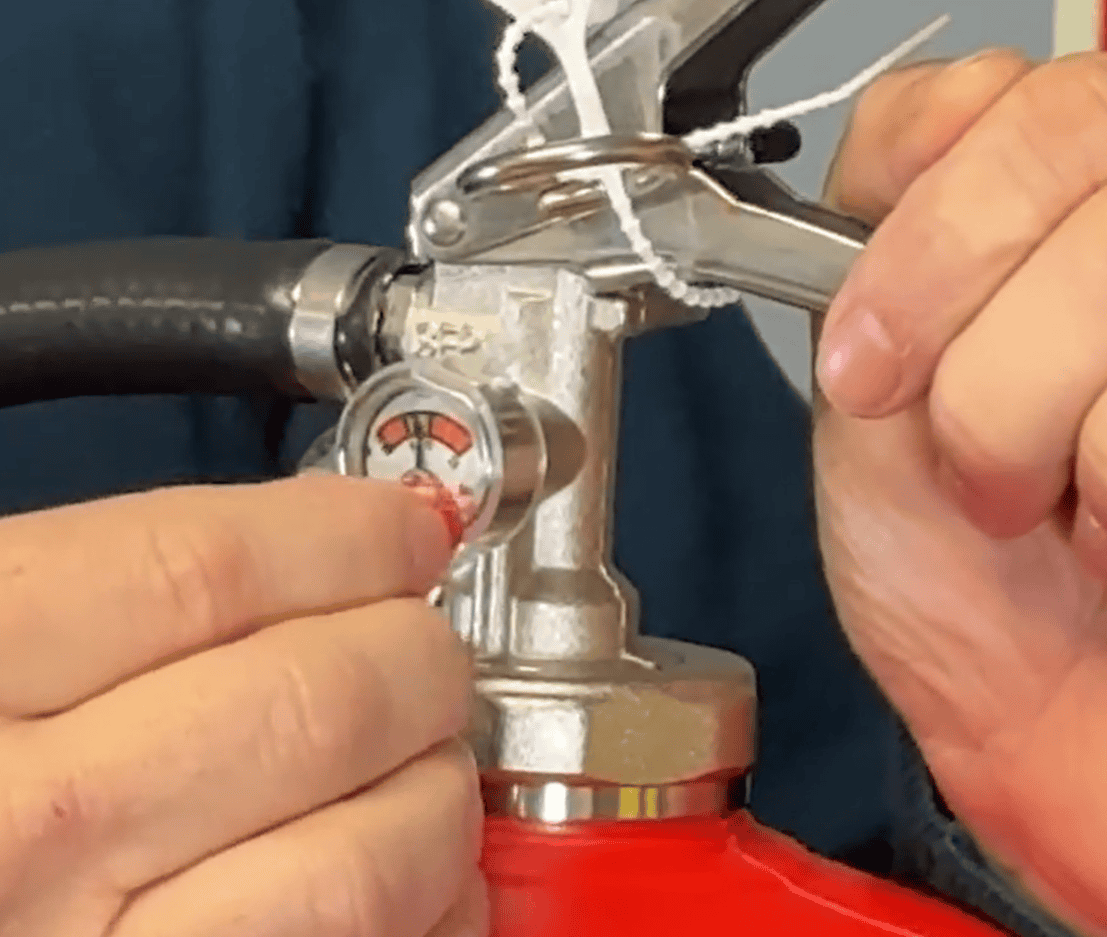
Run the magnet test
Wipe the unit down, take the testing magnet from the base and pass it across each indicator. The needle should move, then return to green.

Confirm the date
A colour-coded stud in the base gives the year of manufacture. At year 10, one manufacturer overhaul extends the lifespan another decade.

Log it
Record the inspection date in your fire logbook and mark the body. Done for another year.

A simple workplace check, not an engineer visit.
The annual P50 inspection can be completed and recorded by a trained member of your own team, which on a remote or offshore asset removes an entire mobilisation.
Two minutes per unit. Once a year.
Every P50MNX9 we commission comes with the logbook, staff walkthrough and written procedure for your fire risk assessment.
Book your free evaluation →The full data sheet.

Where Can You Use A Monnex Extinguisher?
Monnex is a Class B and Class C unit (flammable liquids and gases) and nothing else. These are the premises where that risk is the main event rather than an afterthought, subject to the site’s fire risk assessment.
Fuel Forecourts & Filling Stations

Petrol, diesel and vapour in the open, with vehicles and the public a few metres away. This is the risk Monnex was formulated for, but it covers Class B and C only, so a forecourt still needs separate cover for the shop, the office and everything else made of ordinary combustibles.
Fuel Storage & Tank Farms

Bulk storage, bunded compounds and transfer points, where the whole inventory is Class B and the quantities are not small.
LPG & Gas Cylinder Storage

Cylinder cages, decanting points and gas stores. Class C is the rating that covers a gas risk, and comparatively few extinguishers carry one.
Depots, Plant & Transport Yards

Refuelling bays, bowsers, plant compounds and vehicle yards: sites where the fuel moves around the premises rather than staying in one place.
Aviation & Airfields

Aprons, hangars and general aviation, where fuel handling happens in the open and a fast knock-down on a liquid fire is the whole requirement.
UK Manufactured.
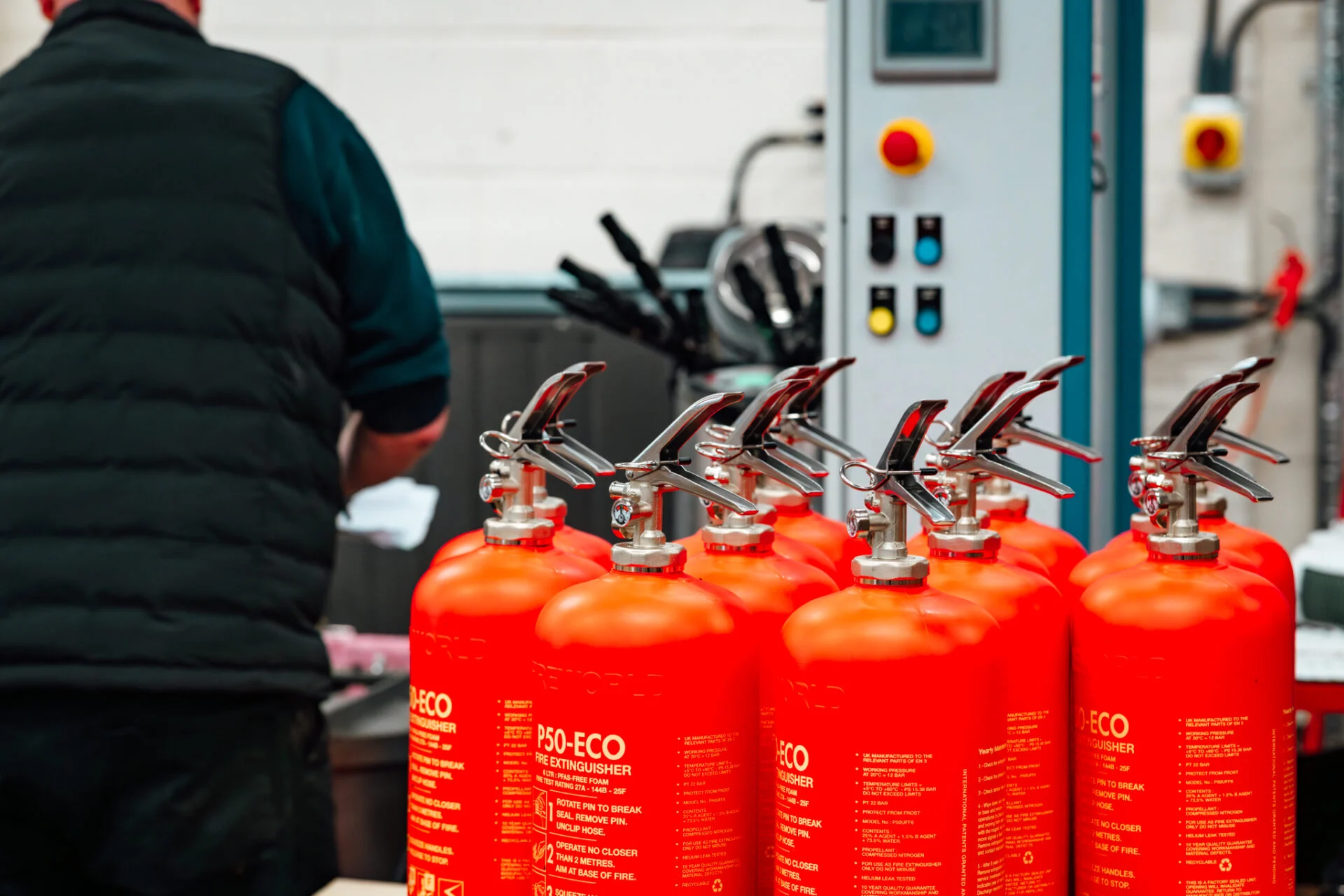
The P50MNX9 isn't assembled from imported parts. This Monnex powder extinguisher is designed and manufactured by Britannia Fire in Norwich, Norfolk. Every cylinder is wound, charged and tested before it leaves the factory floor, which is worth knowing when the asset it's going to is in the North Sea.
Engineered in Norwich
Composite technology developed and refined by Britannia Fire, a British manufacturer, not an importer.
Every unit, before dispatch
Each cylinder is wound in aramid, pressure-charged and individually tested at the factory in England.
UK-wide delivery
Supplied anywhere in the UK by TristarFS, with siting and commissioning available nationwide, including marine and offshore supply.
The maths does the selling.
The purchase price is where a steel extinguisher's costs start. It's where the P50MNX9's stop, and on remote, marine and offshore assets the servicing cost was never really the service, it was getting somebody out there to do it.
Ask before buying.
Straight answers on what a Monnex powder extinguisher is for, what it does and does not cover, why it stops fuel and gas fires faster, marine use, servicing and life. Anything not covered here, book a free evaluation and ask in person.

01What is a Monnex powder extinguisher used for?
02Does the P50MNX9 cover Class A fires?
03Why does Monnex knock fires down faster than standard powder?
04Is it suitable for offshore and marine use?
05Does it need an annual engineering service?
06Does it work in cold conditions?
07Is Monnex powder conductive?
Fit it. Forget it. For ten years.
Every P50MNX9 Monnex powder extinguisher from TristarFS arrives British-built, with the inspection procedure and logbook included and commissioning available UK-wide, including marine and offshore assets.
Evaluations are free and without obligation